The recent escalation against Venezuela by the United States under the guise of combating “narco-terrorism” is a stark manifestation of imperialist aggression. The deployment of warships, nuclear submarines, and thousands of US troops to the Caribbean reflects a deepening crisis of imperialism that relies on force to maintain hegemony in Latin America and beyond. Recently, U.S. forces even shelled a boat off Venezuela’s coast, killing 11 people on board while claiming they were drug smugglers. There was no trial, no due process, no proof—only murder. This is not "law enforcement," it is a deliberate attempt to provoke war and overthrow a sovereign government.
U.S. intervention in Latin America traces back to the Monroe Doctrine of 1823. Ostensibly framed to keep European powers at bay, it in practice transformed Latin America and the Caribbean into Washington’s “backyard,” justifying interventions, occupations, and the overthrow of democratically elected governments, from Guatemala and Chile to Honduras and Haiti, for over two centuries. The current aggression toward Venezuela is the latest chapter in this long, coercive history.
Since the Bolivarian Revolution came to power in 1998, Venezuela has been under relentless attack:
April 11, 2002 coup against President Hugo Chávez.
The so-called “oil strike” organized from December 2002 to January 2003 to sabotage the economy.
The infamous 2015 executive order by U.S. President Barack Obama, declaring a “national emergency” over the “unusual and extraordinary” threat posed by Venezuela.
After President Chávez’s passing, attacks intensified: sabotage of the national electrical grid left almost the entire country without power for a week, and violent street riots where people were burned alive for appearing to be Chavista.
August 4, 2018 drone attack detonated explosives near a public event attended by President Nicolás Maduro.
More than 1,040 unilateral and illegal coercive measures have been imposed to economically blockade and strangle Venezuela’s economy.
The U.S. obsession with Venezuela is rooted in the country’s vast oil reserves and its commitment to the Bolivarian Revolution. In the pre-revolutionary neoliberal period, Venezuela functioned as a semi-colonial oil exporter. By contrast, the revolution nationalized strategic resources so that profits serve the Venezuelan people rather than foreign banks and corporations. This is the real reason behind Washington’s hostility. Today, the U.S. falsely claims it is fighting “drug trafficking by the government,” which is not happening, while its true objective is clear: to seize Venezuela’s oil and end the Maduro government, which has resisted U.S. imperialism and stands as an example to the region. As comrade Diosdado Cabello affirmed, “We are deployed in the Caribbean Sea, in our Venezuelan territorial waters, to defend our sovereignty.” The government of Nicolás Maduro is firmly defending Venezuela’s sovereignty and independence and refuses to buckle under U.S. pressure. This defiance challenges the U.S. monopoly on regional power.
Washington’s narrative that Venezuela is a “narco-state” collapses under scrutiny. The DEA, the United Nations, and European agencies do not even list Venezuela as a major drug-trafficking country. Pino Arlacchi, former director of the UN anti-drug and crime program, called the so-called “Cartel de los Soles” “as mythical as the Loch Ness Monster,” useful only for justifying sanctions, embargoes, and threats of military intervention, especially against a country that sits atop one of the world’s largest oil reserves. Recently, Donald Trump went so far as to brand President Nicolás Maduro the head of a non-existent cartel and doubled a bounty for Maduro’s capture from $25 million to $50 million, an egregious escalation based on fabrications. Accusing Maduro of drug trafficking is a textbook case of demonization.
Inspired by the ideals of Simón Bolívar and Hugo Chávez, the Bolivarian Revolution advocates for a multipolar world free from U.S. hegemony. Regional partners, including the Bolivarian Alliance for the Peoples of Our America (ALBA-TCP), have condemned U.S. aggression as a violation of peace and self-determination. At an ALBA-TCP summit, Cuban President Miguel Díaz-Canel stated, “Cuba firmly denounces this new demonstration of imperial force... the whole region is under threat, and only with integration can we fight back.” Venezuela and China enjoy an “ironclad friendship,” which Hugo Chávez described as a “Great Wall against U.S. imperialism,” reflecting a strategic partnership for development and sovereignty. Venezuela is friendly with Russia, Iran, Palestine, Cuba, Nicaragua, the DPRK, and other nations targeted by Washington, building South-South cooperation that resists coercion and defends the right of nations to choose their own path.
A U.S. intervention would exacerbate regional instability, displace populations, and undermine the social achievements of the Bolivarian Revolution, including poverty reduction and universal access to education and healthcare. It would intensify the cycle of violence and underdevelopment seen in other nations targeted by imperialism, including Syria, Iraq, and Libya. As always, the working class would bear the brunt through militarization, economic exploitation, and the loss of sovereignty.
From New York to Caracas and Tehran to Gaza, our struggles are one. Venezuela is one of the most vocal supporters of Palestinian liberation and a critic of Israel’s project of genocide, apartheid, and ethnic cleansing. President Nicolás Maduro has called Palestine “the cause of humanity,” condemned the Gaza genocide as a moral crime, and, following the assassination of Hassan Nasrallah, expressed solidarity with Hezbollah and with the peoples of Lebanon, Yemen, Syria and Palestine. He has described Benjamin Netanyahu as “the Hitler of the 21st century.” Legendary Palestinian revolutionary Leila Khaled joined President Maduro and hundreds of internationalists in Caracas for Palestine Solidarity Day, tying the legacy of Bolívar and Chávez to today’s Palestinian resistance.
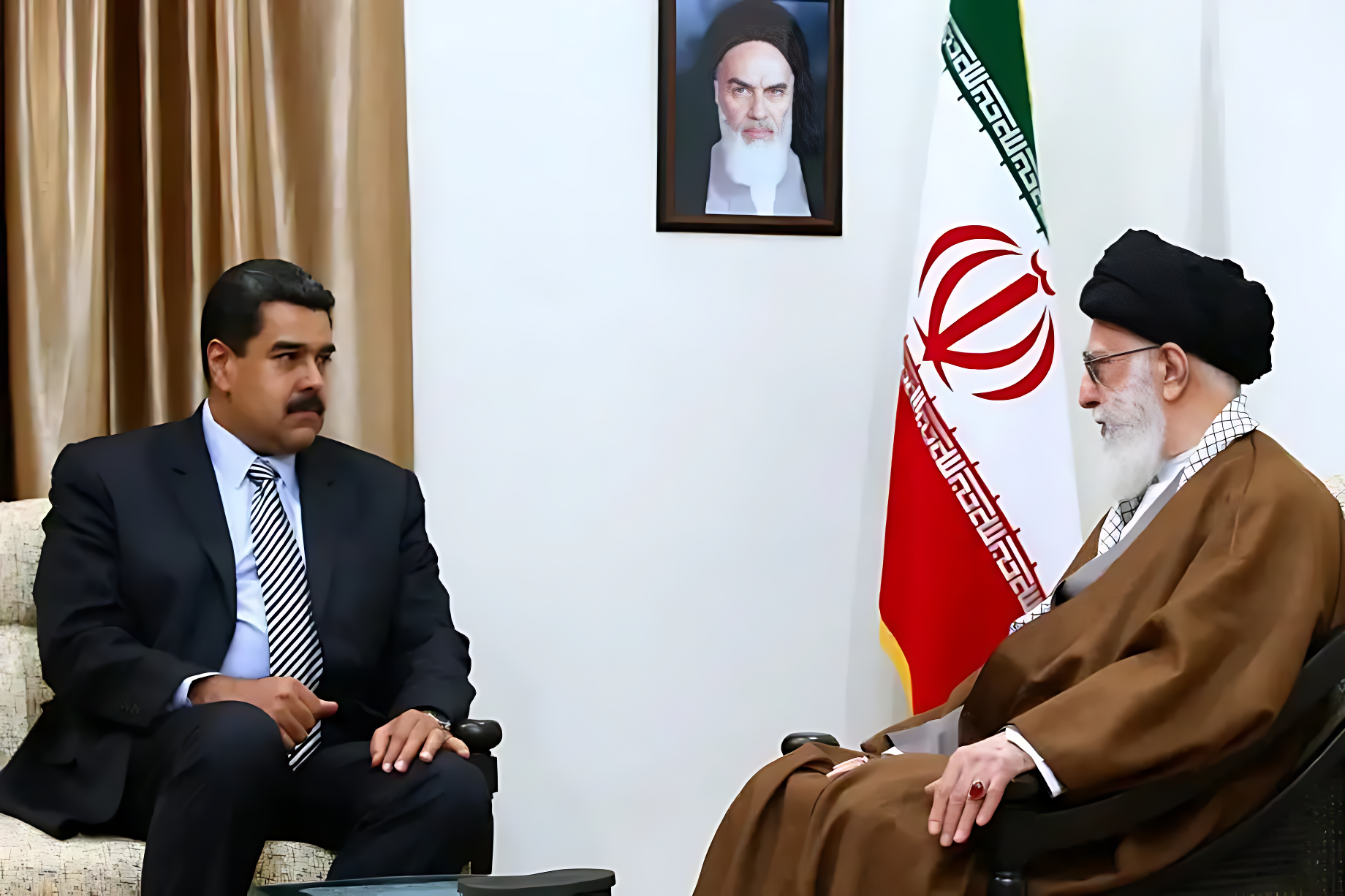
Likewise, Venezuela and Iran have forged a concrete anti-imperialist partnership, rooted by Chávez and strengthened when General Qassem Soleimani facilitated rapid Iranian assistance to help restore Venezuela’s power grid amid U.S. sanctions and cyberattacks in 2019. Today, as Washington escalates threats in the Caribbean and West Asia faces renewed aggression, leaders in both countries have exchanged unequivocal support, Tehran condemning U.S. warmongering against Venezuela, and Caracas denouncing Israeli crimes and affirming Iran’s right to self-defense, proof of an intercontinental alliance to defend sovereignty against U.S.-led imperialism.
These bonds make the connection unmistakable. The same forces aiming to starve and subjugate Palestine are attacking Venezuela’s independence and control over its resources. If you stand with Palestine, stand with Venezuela, one struggle to end U.S. hegemony and imperialism and to win sovereignty and self-determination. In the face of these threats, anti-imperialist forces must unite to defend Venezuela’s sovereignty and its right to self-determination. As revolutionary Chavistas declare, “No empire will touch the sacred soil of Venezuela.” This fight is part of a broader class struggle for liberation across the Americas, and only through international solidarity and the unwavering defense of the Bolivarian Revolution can we move toward a world free from exploitation and war.